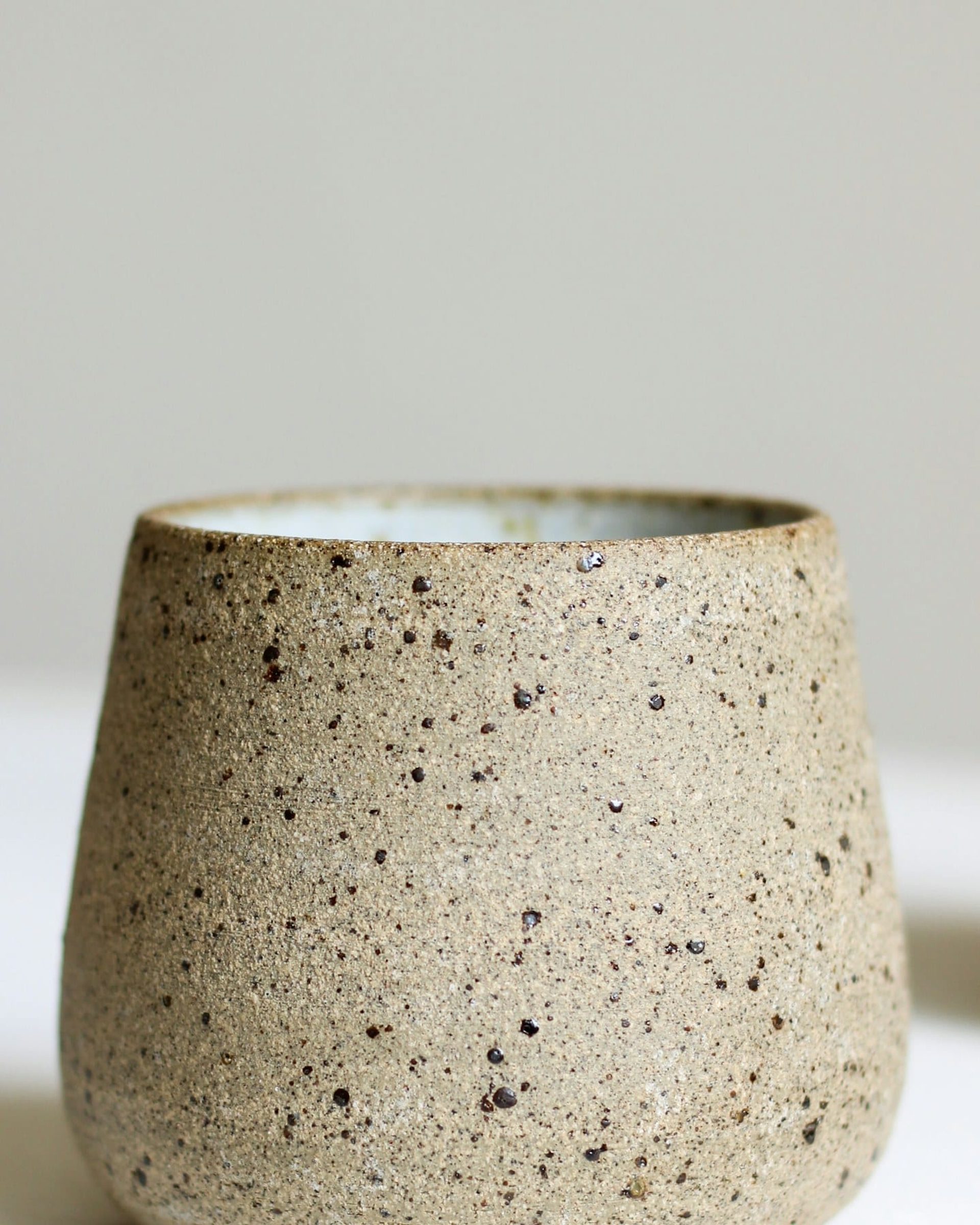
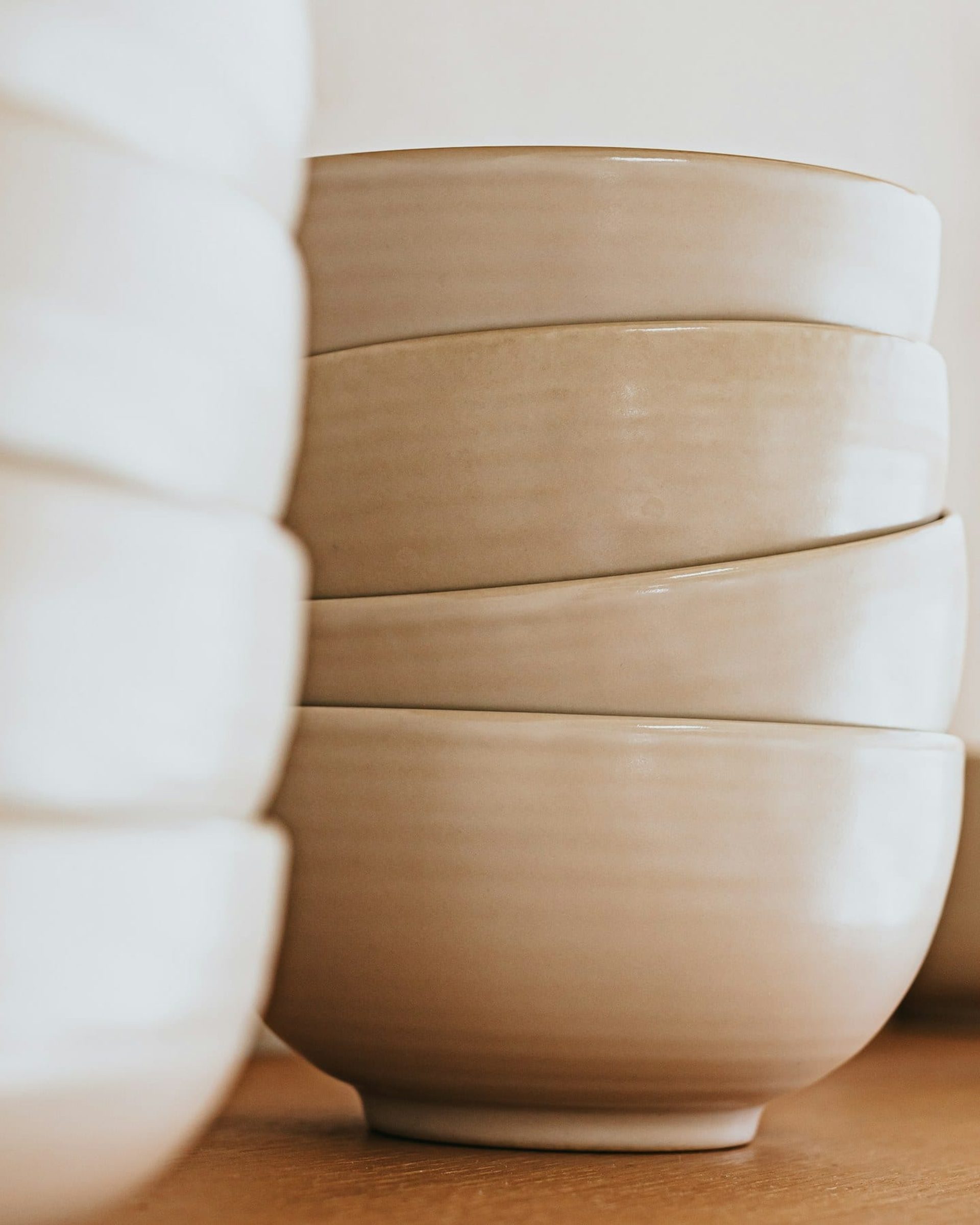
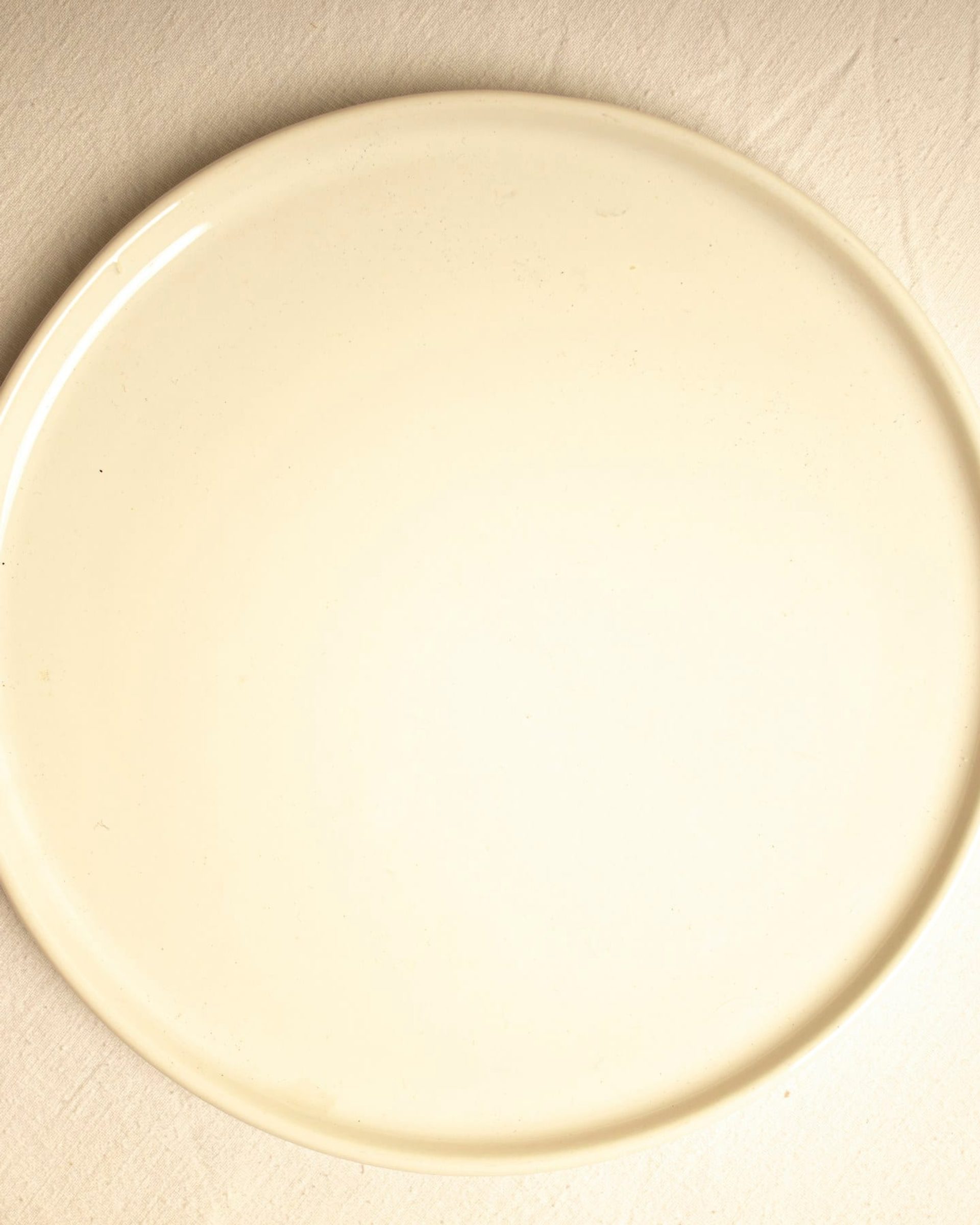
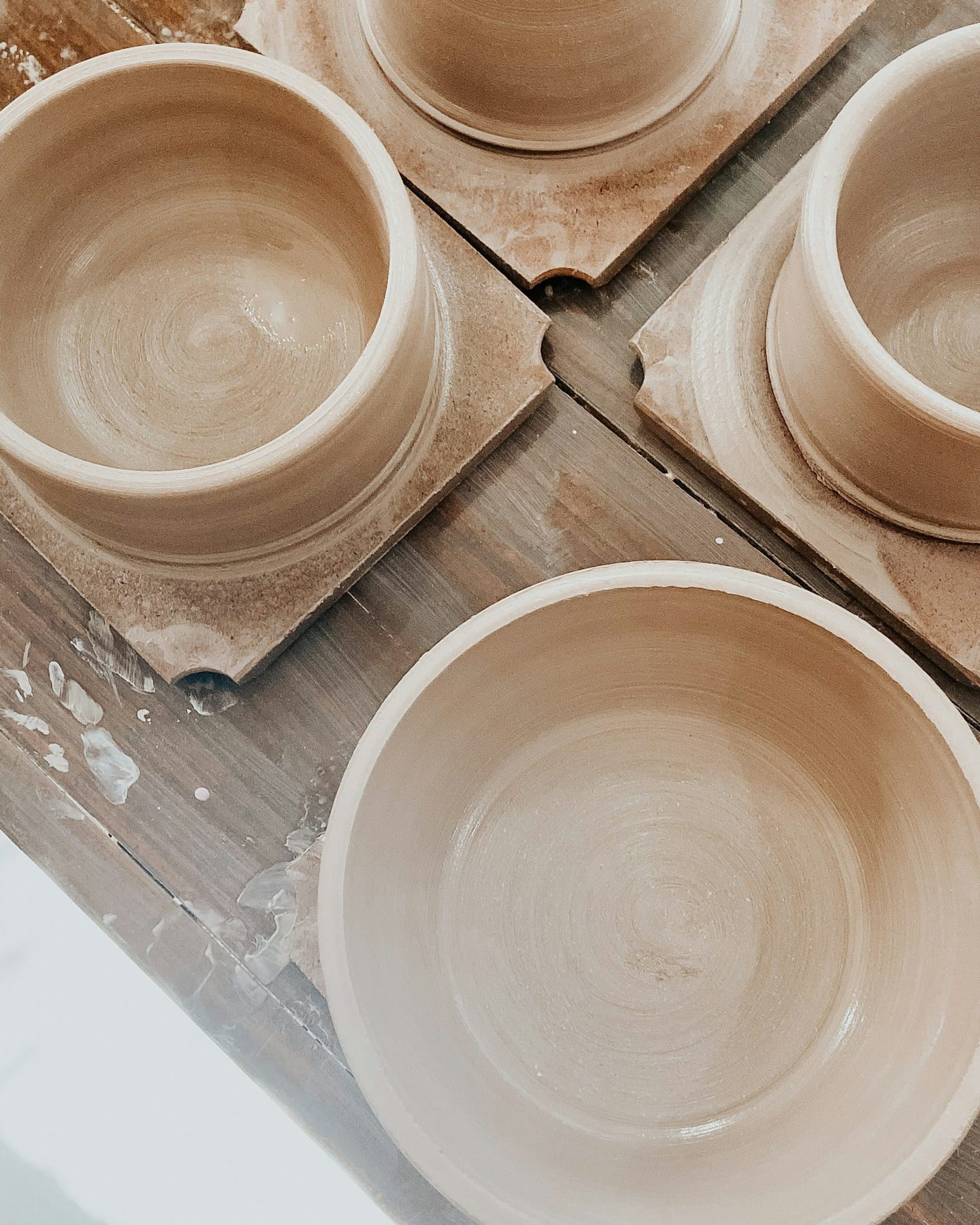
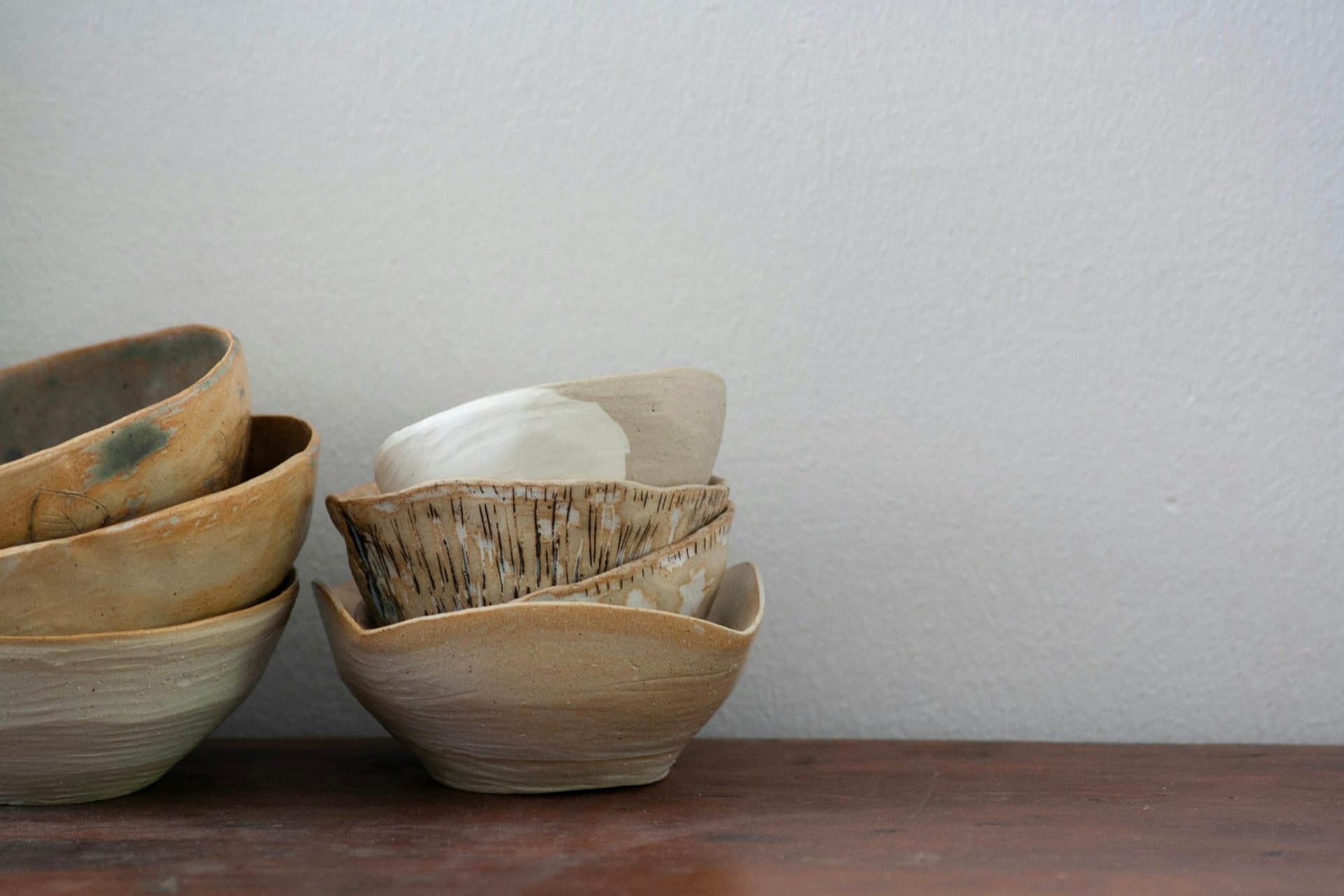
A kiln cycle at Classic Ceramics runs to thirty-one hours. Most of that time nothing appears to be happening — which is precisely the point.
A commercial tunnel kiln can move a plate from cold to finished in under four hours. Ours takes thirty-one. The difference is not romance; it is what happens to the glaze in the last two hundred degrees.
Held longer at temperature, a satin glaze continues to mature. Crystals grow, the surface tension settles, and the sharp edge between glaze and body softens into a gradient. Rush that stage and the result is technically identical and visually flat.
The quiet hours
Between 600°C and 900°C nothing visible occurs. Water has long since left the clay, the glaze has not yet begun to melt, and the pyrometer climbs at forty degrees an hour. This is the stretch that most production schedules compress.
We leave it alone. Carbon burns out completely, the body vitrifies evenly, and pieces that would otherwise carry a faint grey core come out clean the whole way through.
Cooling is a firing too
The kiln is closed for eleven hours after the burners stop. Cracking it early to speed a turnaround introduces thermal stress that will not show for months and then shows all at once.
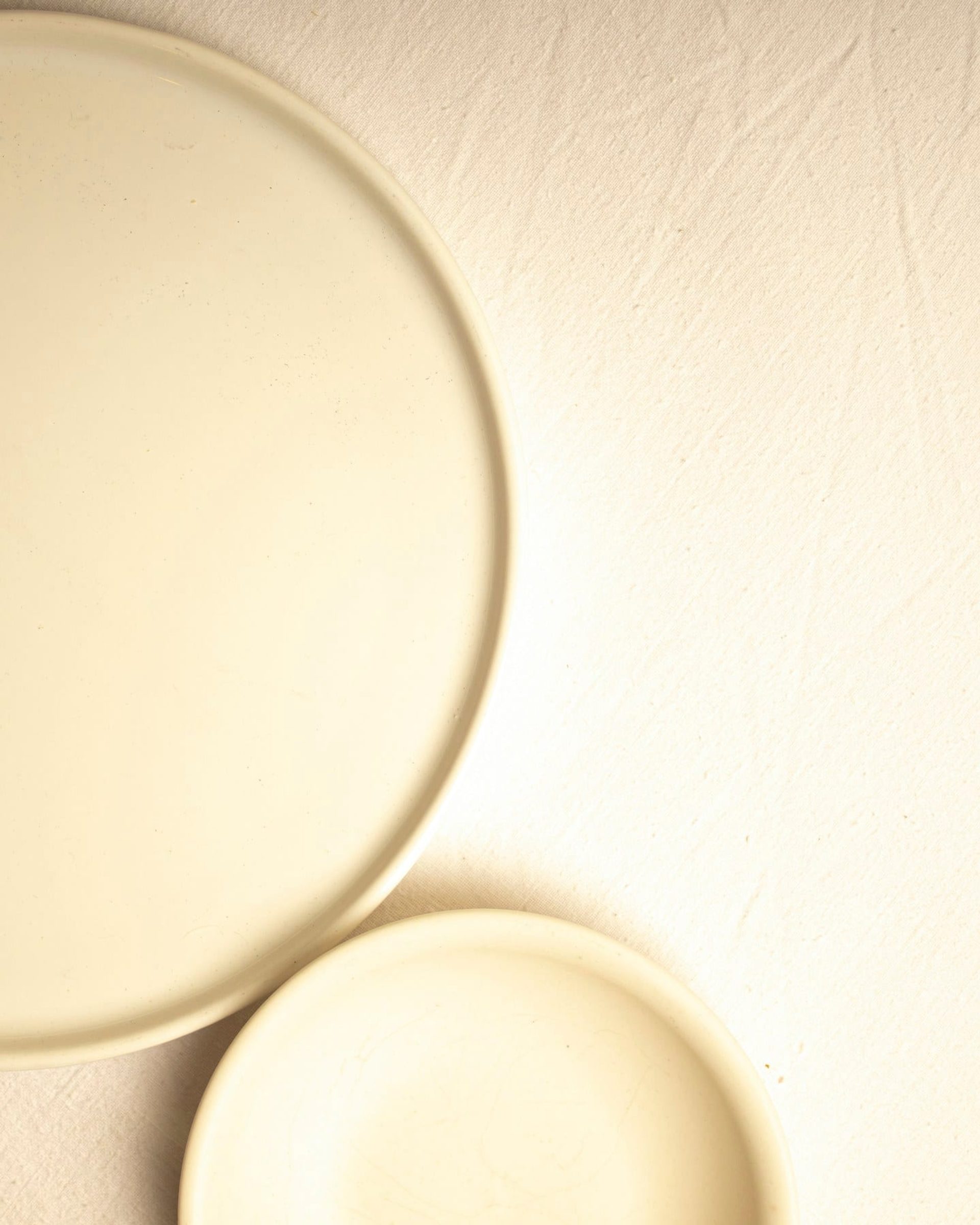
A slow cool also deepens colour. The same butter glaze pulled at 400°C is noticeably paler than one left to fall to room temperature in the dark.
Written by the Classic Ceramics studio. Questions about anything here are welcome —write to us.